
Quotation vs invoice: the same project, before and after approval
By Invoiceo · Published
A quotation sets out the work you propose and its price so a client can decide whether to approve it. An invoice asks for payment when it is due under your agreement. The same project can need both, with different references, dates and next actions.
Below, a fictional ₹6,000 logo project goes from quotation to invoice. You can compare the documents and download both PDFs.
Quotation vs invoice: the main differences
Scroll across the table to compare both documents.
| Detail | Quotation | Invoice |
|---|---|---|
| Purpose | Propose scope, price and terms. | Request payment for an agreed billable amount. |
| When you send it | While agreeing the job, before proceeding on those terms. | At the agreed billing point: a deposit, milestone or completion. |
| Key date | Issue date and offer expiry, if you set one. | Invoice date and payment due date. |
| Client’s next action | Review, ask for changes or confirm the terms. | Check the bill and arrange payment. |
| Record to keep | The issued version and the client’s response. | The issued invoice and a separate payment record. |
Keep quote expiry and payment due dates separate. “Valid through 24 November” says how long an offer is open. “Payment due 9 December” says when an invoiced amount should be paid.
For general document guidance, the Australian government explains what a written quote covers and how an invoice requests payment. Its local tax and legal rules apply to Australia; this comparison does not establish the requirements for your business in India or elsewhere.
The same ₹6,000 design project, before and after approval
Blue Kite Design proposes one logo design package, including two revision rounds, to River Studio. Both names and every event below are fictional. The future dates show a hypothetical sequence, not work completed for a real customer.
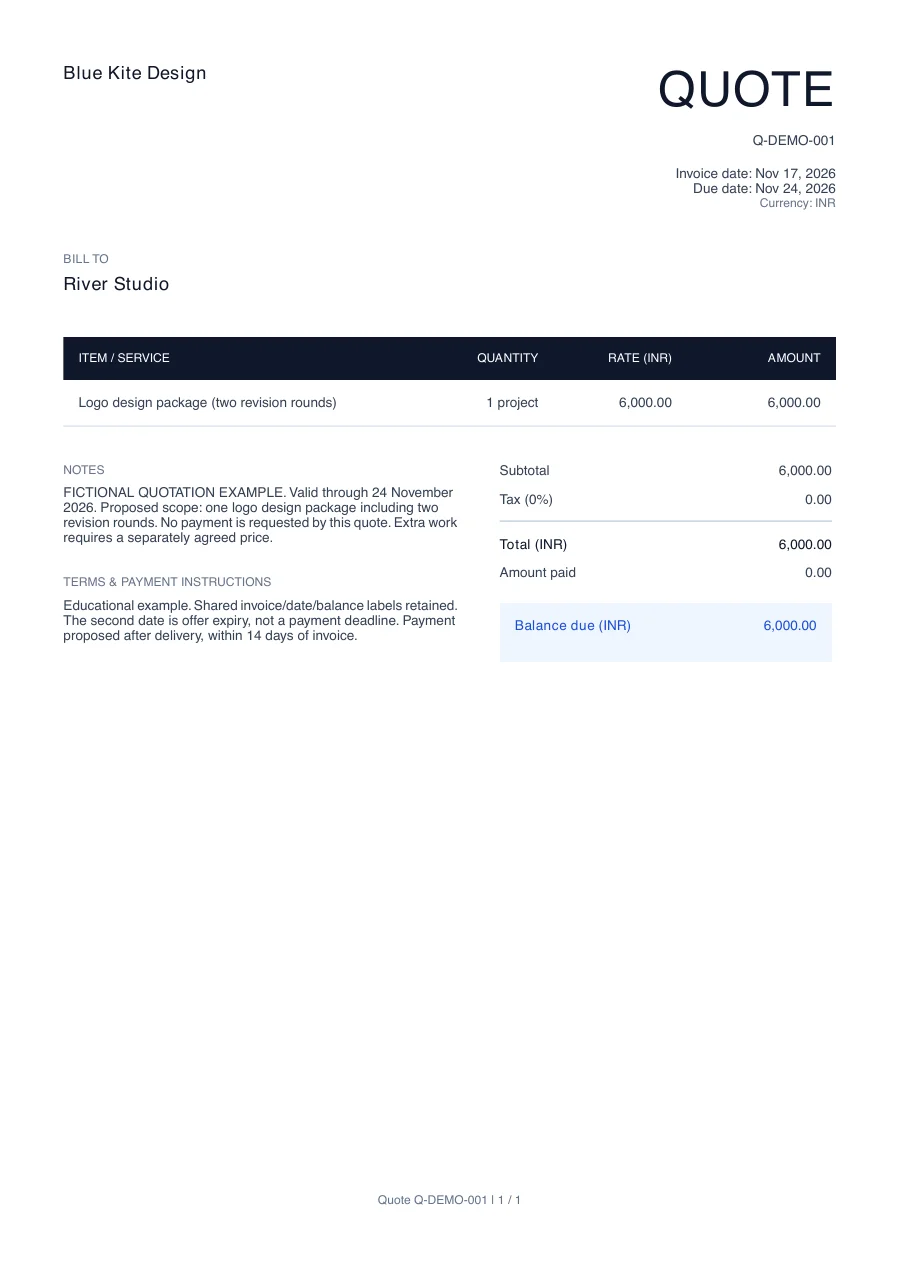
- 17 November 2026: issue quotation Q-DEMO-001 for 1 project × ₹6,000. The offer is valid through 24 November. Ask the client to confirm the scope and terms.
- 18 November: imagine the client confirms that version in writing. Keep the response with the quotation before starting the agreed work.
- 25 November: imagine the package has been delivered and the agreed billing point reached. Issue invoice INV-DEMO-001, referencing Q-DEMO-001, with payment due 9 December under the example 14-day term.
Same scope, same price: ₹6,000
Both examples use one project at ₹6,000, with no discount, shipping, tax or payment added. The invoice’s balance due is ₹6,000. Zero tax keeps the example arithmetic simple; it does not establish a tax exemption or provide a tax-compliant template for your business.
These PDFs were generated with Invoiceo’s guest PDF generator. Its Quote title uses the shared invoice layout, including “Invoice date”, “Due date” and “Balance due” labels. In the quote sample, the notes explicitly identify 24 November as the offer expiry and say that no payment is requested. Read those notes with the shared labels.
1. Quotation: review the proposed job
2. Invoice: payment is now requested
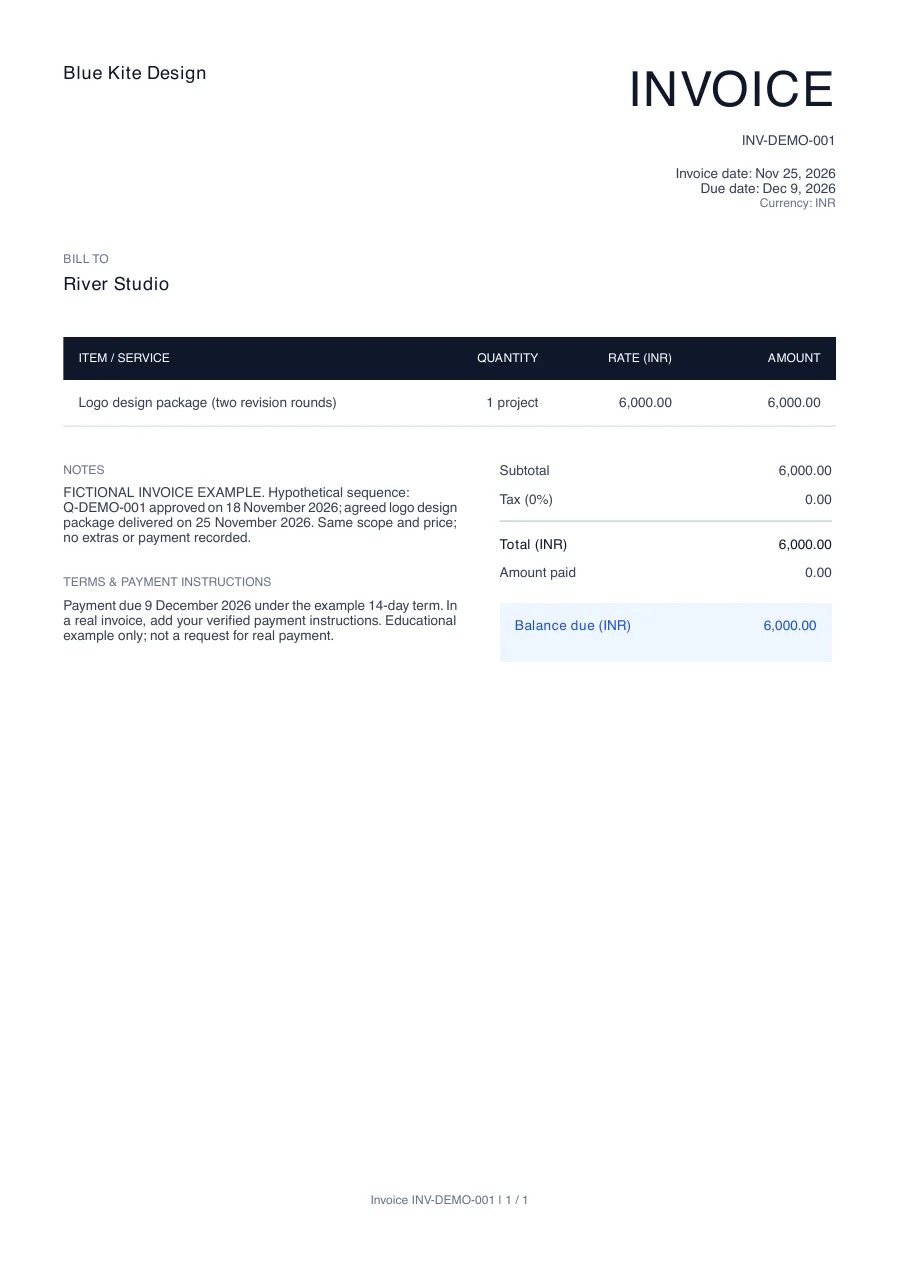
Carry the agreed description and price into the invoice, then add the invoice’s own reference, issue date, payment deadline and verified payment instructions. Keep the original quote and approval as separate records. The invoice sample asks you to add real payment instructions rather than supplying fictional bank details.
Handle scope changes before they become billing surprises
Suppose River Studio asks for a third revision round. The original package includes two. Describe the extra work, agree its price and timing in writing, and keep that agreement with the project records before including the extra charge on an invoice. The sample PDFs keep the original scope, so both totals remain ₹6,000.
If a quotation expires before the client responds, review the scope, availability and price before confirming a new version. Keep the versions identifiable so the invoice can refer to the terms actually agreed.
Can an invoice come before the work is finished?
A deposit or milestone can be an agreed billing point. For example, a 50% deposit on this ₹6,000 project would be ₹3,000. Clearly describe what that invoice covers and reconcile any payment received before preparing a later balance invoice. Our paired examples use full payment after delivery and do not demonstrate deposit handling.
Does an invoice prove the client has paid?
Check payment against your payment records. Creating, downloading or sending the PDF does not record a bank transfer or establish receipt of funds. Keep the amount paid and remaining balance consistent with what you have actually received.
Create the document for your next step
For a guest PDF, open Invoiceo, select the document title, enter your parties and agreed line items, then review the actual PDF before sending it yourself. The free guest creator does not require signup. Changing the title keeps the shared invoice form and calculations; it does not record client approval or perform an account quotation conversion.
Use the Quote title to inspect that shared layout. If you need help entering invoice fields, follow our worked freelance invoice guide or the guest walkthrough. Keep copies of the documents and the client’s actual response.
Billing a design project? See the graphic design invoice example with agreed revisions.